Cuina Catalana · From the Pyrenees to the Sea

Catalan Cooking Without Vegetable Oil

Step into the kitchens of Catalonia, where the sofregit cooks low and slow in olive oil, fideus toast to a nut brown before they ever meet the broth, and the crema catalana crackles under its burnt sugar crust. Honest ingredients and deep flavor, the way this coast has always cooked.

Oli d'Oliva Llard Mantega
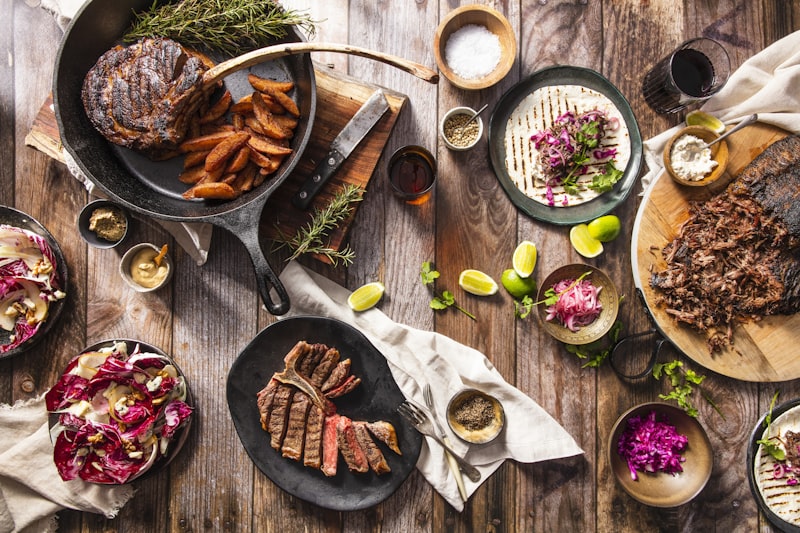
An elegantly plated Catalan dish on a dark restaurant table
Mar i Muntanya
From the recipe collection
Oli d'Oliva

Olive Oil First

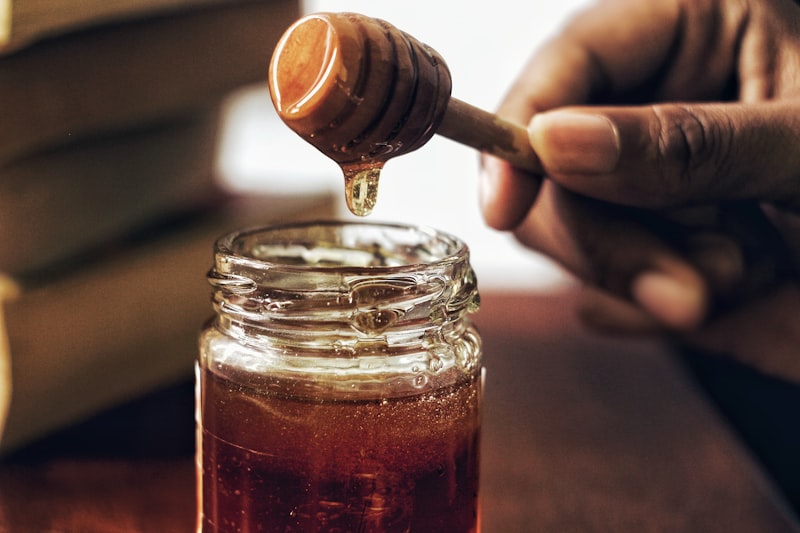
Catalonia's kitchens were built on olive oil pressed from Arbequina groves. Every sofregit, romesco, and allioli in this collection begins with it, never with a refined seed oil.

Llard

The Old Larder

Llard, the pork lard of the masia larder, enriches coca doughs and crisps potatoes the way the farmhouses of the interior have always done it.

Sofregit

Slow Sofregit

Onion and tomato melted patiently in olive oil until sweet and dark. It is the quiet foundation of the Catalan table, and no vegetable oil shortcut can imitate it.

From Our Kitchen

Catalan Recipes

Six beloved dishes from the masies and harbors of Catalonia, each cooked with the honest fats that bring out the best in every ingredient.

Empordà Mar i muntanya, chicken and prawns in a deep amber sauce

Mar i Muntanya

Chicken and prawns, sea and mountain

1 hr 20 min·4 servings·Medium

The proud signature of the Empordà, where the farmyard meets the fishing boat in one pot. Chicken and prawns simmered over a slow sofregit and finished with a pounded picada of almonds and saffron.

Ingredients

  • 8 chicken thighs, bone in, skin on
  • Salt and freshly ground black pepper
  • 5 tbsp olive oil
  • 12 large prawns, shell on
  • 2 onions, finely chopped
  • 4 ripe tomatoes, halved and grated
  • 1 small glass of brandy
  • 250 ml chicken stock
  • For the picada: 2 garlic cloves, 12 toasted almonds, 1 slice of bread fried in olive oil
  • A pinch of saffron threads and a handful of chopped parsley

Instructions

  1. Season the chicken and brown it in the olive oil in a wide cazuela over medium heat, about 10 minutes, then set aside.
  2. In the same pan, sear the prawns 1 minute per side until just pink and lift them out.
  3. Lower the heat and cook the onion slowly for 20 minutes, then add the grated tomato and cook 10 minutes more until the sofregit is thick and dark.
  4. Pour in the brandy, let it bubble away, then return the chicken with the stock and simmer gently, covered, for 35 minutes.
  5. Meanwhile pound the garlic, almonds, fried bread, and saffron in a mortar to a coarse paste.
  6. Stir the picada into the pot, return the prawns, and simmer 5 minutes more until the sauce clings.
  7. Rest the cazuela 5 minutes off the heat, scatter with parsley, and bring it whole to the table.
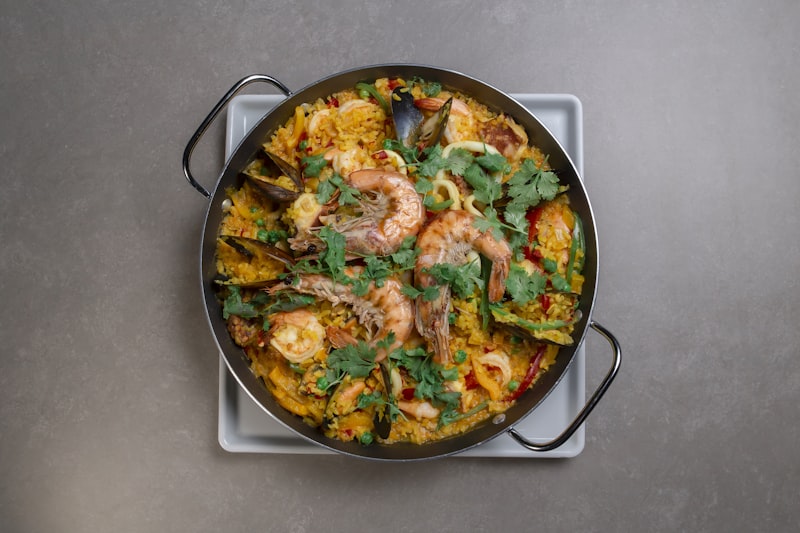
Barceloneta Fideua, toasted noodles with seafood served in a wide pan

Fideuà amb Allioli

Toasted noodles with seafood

55 min·4 servings·Medium

The seafront answer to paella, cooked in the same wide pan but with short fideus noodles toasted in olive oil until nut brown. Served the only proper way, with a spoonful of allioli.

Ingredients

  • 400 g fideus (short thin noodles)
  • 6 tbsp olive oil, divided
  • 250 g monkfish, in chunks
  • 12 prawns, shell on
  • 200 g cuttlefish or squid, chopped
  • 1 onion, finely chopped
  • 3 ripe tomatoes, grated
  • 1 tsp sweet paprika and a pinch of saffron
  • 1.2 litres hot fish stock
  • Allioli: 2 garlic cloves pounded with salt and emulsified with olive oil

Instructions

  1. Warm 3 tbsp of the olive oil in a wide paella pan and toast the dry fideus, stirring, until they turn a deep nut brown. Tip them out.
  2. Add the remaining oil and sear the monkfish, prawns, and cuttlefish briefly, then set the prawns aside.
  3. Make the sofregit: cook the onion 15 minutes, add the tomato and paprika, and cook until thick and jammy.
  4. Pour in the hot stock with the saffron and bring to a lively boil.
  5. Scatter the toasted fideus evenly into the pan, nestle in the seafood, and cook without stirring for 8 to 10 minutes until the stock is absorbed.
  6. Lay the prawns on top for the last 3 minutes and let the bottom catch slightly for the prized crust.
  7. Rest 5 minutes under a clean cloth and serve straight from the pan with allioli.
L'Hort Escalivada, fire roasted vegetables dressed with olive oil

Escalivada amb Romesco

Fire roasted vegetables, romesco sauce

1 hr·4 servings·Easy

Escalivar means to cook in embers, and this is the garden of Catalonia laid on a plate. Eggplant, peppers, and onions roasted until collapsing, torn by hand, and served with the nut and pepper sauce of Tarragona.

Ingredients

  • 2 eggplants
  • 3 red bell peppers
  • 2 red onions, unpeeled
  • 4 ripe tomatoes
  • Olive oil, generously
  • Flaky sea salt
  • For the romesco: 2 dried nyora peppers (or 2 tsp sweet paprika)
  • 50 g toasted almonds and 50 g toasted hazelnuts
  • 2 garlic cloves and 1 tbsp sherry vinegar
  • Toasted country bread, to serve

Instructions

  1. Roast the whole eggplants, peppers, onions, and 2 of the tomatoes at 220°C (430°F) for 40 to 50 minutes, turning once, until blackened and soft.
  2. Rest the vegetables covered in a bowl for 15 minutes so the skins loosen.
  3. Meanwhile make the romesco: soak the nyoras, then blend their flesh with the remaining raw tomatoes, nuts, garlic, vinegar, and enough olive oil for a thick sauce.
  4. Peel the roasted vegetables by hand and tear the flesh into long strips. Never rinse them, the smoky juices are the point.
  5. Arrange the strips on a platter, season with flaky salt, and dress generously with olive oil.
  6. Serve at room temperature with the romesco and warm toasted bread.
Masia Escudella, a golden Catalan broth served steaming in a bowl

Escudella i Carn d'Olla

The great Catalan winter soup

2 hr 30 min·6 servings·Medium

The dish that gathers Catalan families around the winter table. A deep broth of meats and chickpeas served with big galets pasta, followed by the carn d'olla, the meats and vegetables that made it.

Ingredients

  • 500 g beef shank
  • 4 chicken thighs
  • 1 ham bone and 1 fresh botifarra sausage
  • 200 g dried chickpeas, soaked overnight
  • 2 carrots and 1 leek, in large pieces
  • 2 potatoes, halved
  • ¼ green cabbage, in wedges
  • 150 g galets (large snail shell pasta)
  • For the pilota: 200 g minced pork, 1 egg, 2 tbsp breadcrumbs, 1 garlic clove, chopped parsley
  • Salt and black pepper

Instructions

  1. Cover the beef, chicken, ham bone, and chickpeas with 3 litres of cold water, bring to a simmer, and skim well.
  2. Simmer gently, partly covered, for 1 hour 30 minutes, skimming now and then.
  3. Mix the pilota ingredients, season, and shape into 2 plump oval meatballs dusted with breadcrumbs.
  4. Add the carrots, leek, potatoes, cabbage, botifarra, and the pilotes to the pot and simmer 30 minutes more.
  5. Strain off about 1.5 litres of the broth into a clean pot, bring to a boil, and cook the galets until tender.
  6. Serve the escudella first: the golden broth with its galets, seasoned to taste.
  7. Follow with the carn d'olla: the sliced meats, pilota, and vegetables arranged on a warm platter.
El Forn Coca de recapte, golden baked flatbreads on a bakery board

Coca de Recapte

Catalan flatbread from the bakery oven

2 hr·2 cocas, 6 servings·Medium

Recapte means whatever the pantry gathered, laid over an olive oil and llard dough and sent to the baker's oven. The classic dressing is escalivada with anchovies, eaten warm in hand.

Ingredients

  • 500 g bread flour
  • 7 g instant yeast
  • 1 tsp salt
  • 280 ml warm water
  • 50 ml olive oil, plus more for finishing
  • 2 tbsp llard (pork lard), softened
  • 1 roasted red pepper, in strips
  • 1 roasted eggplant, in strips
  • 8 anchovy fillets (or slices of botifarra)
  • Flaky sea salt

Instructions

  1. Knead the flour, yeast, salt, water, olive oil, and llard for 10 minutes to a soft, supple dough.
  2. Cover and let it rise about 1 hour until doubled.
  3. Divide in two and press each piece into a long, thin oval on oiled trays, dimpling with your fingertips.
  4. Lay the pepper and eggplant strips along each coca and tuck in the anchovies.
  5. Drizzle with olive oil, scatter with flaky salt, and rest 20 minutes while the oven heats to 220°C (430°F).
  6. Bake 18 to 20 minutes until the edges are deep gold and crisp.
  7. Brush the warm crust with one more thread of olive oil and serve in wide slices.
Postres Crema catalana, custard with a caramelized sugar crust

Crema Catalana

Burnt sugar custard for Sant Josep

40 min + chilling·6 servings·Easy

Catalonia's beloved custard, perfumed with lemon peel and cinnamon and finished under a sheet of burnt sugar. Tradition serves it on Sant Josep in March, but no Catalan waits for the calendar.

Ingredients

  • 1 litre whole milk
  • Peel of 1 lemon, in wide strips
  • 1 cinnamon stick
  • 8 egg yolks
  • 180 g sugar, plus 6 tbsp for the crust
  • 40 g cornstarch
  • A pinch of salt

Instructions

  1. Warm the milk with the lemon peel and cinnamon to a bare simmer, then cover and infuse 15 minutes.
  2. Whisk the yolks, sugar, cornstarch, and salt in a bowl until pale and smooth.
  3. Strain the warm milk over the yolks in a thin stream, whisking constantly.
  4. Return to a clean pot and cook over low heat, stirring always, until the custard thickens enough to coat the spoon. Never let it boil.
  5. Pour into 6 shallow cazuelitas and chill at least 4 hours until set.
  6. Just before serving, sprinkle each with a thin, even layer of sugar and caramelize with a hot iron or kitchen torch to a glassy crust.
  7. Serve at once, while the crust still crackles against the cold cream.
A cook working at a warm stove in a busy home kitchen
Our Kitchen

The Kitchen Behind Camllo Cuina

Camllo Cuina is a small home kitchen devoted to the cooking of Catalonia, the corner of the Mediterranean where the Pyrenees walk down to the sea and the table has a name for everything, from the first sofregit of the day to the last spoonful of picada. We write these recipes down the way they are still cooked in masies and harbor kitchens, patiently, precisely, and always beginning with good olive oil.

Our only house rule is an old one: olive oil from Arbequina groves, llard rendered the traditional way, butter from the mountain valleys and nothing else. Vegetable oil never comes through our door, because it never sat on the tables we learned from. In late winter we char calçots over the flame and dip them in romesco, and the rest of the year we cook everything else in these pages.

Bon profit, may it feed you well.